
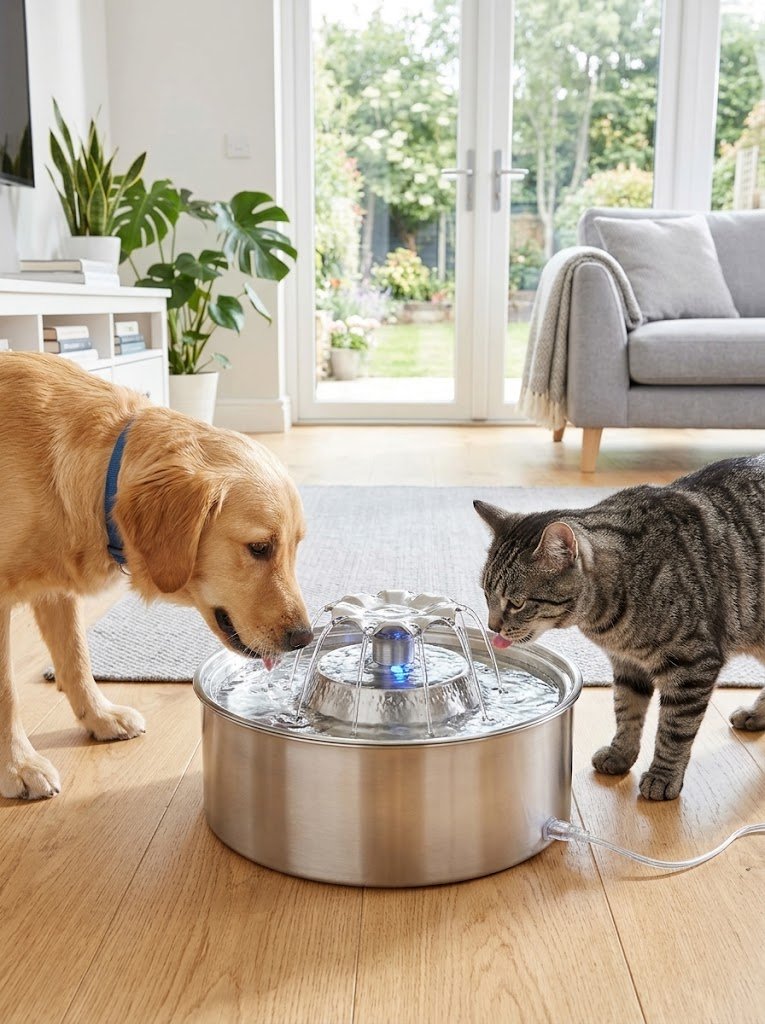
What Is an Automatic Pet Water Fountain? How It Works
Know what an Automatic Pet Water Fountain is, how it works, the different types available, and key features to keep your pets hydrated.
Introduction
Keeping fresh drinking water available is one of the simplest yet most important parts of responsible pet ownership. While a traditional water bowl works well for many cats and dogs, an automatic pet water fountain offers an alternative by circulating water through a small pump.
These devices provide a convenient drinking station for pets at home. Depending on the model, they may feature replaceable filters, adjustable water flow, large reservoirs, and even smart monitoring functions.
But what exactly is an automatic pet water fountain, and how does it work? What types are available, and which features should pet owners look for?
In this guide, we explain the basics of automatic pet water fountains, their main components, the different designs available, and the practical considerations that can help you choose a suitable model for your furry companion.
What Is an Automatic Pet Water Fountain?
An automatic pet water fountain is a drinking device that uses a pump to circulate water through a reservoir and a drinking area. Instead of relying entirely on still water in a bowl, it creates a continuous or intermittent flow, depending on its design.
Many models include a filtration system intended to capture hair, food particles, and other debris. Some also use activated carbon or other filter materials to help reduce certain unwanted tastes or odours.
Pet water fountains are available in different sizes, materials, and designs to suit cats, dogs, and multi-pet households.
Some are simple plug-in devices, while others offer cordless operation, motion activation, or connected features that help owners monitor water levels.
It is important to remember that a fountain does not automatically make water safe or clean indefinitely. Fresh water, regular cleaning, and proper maintenance are still essential.
How Does an Automatic Pet Water Fountain Work?
Although designs differ, most automatic pet water fountains operate using a straightforward system.
1. The Water Reservoir
The reservoir holds the water available for your pet to drink. Depending on the model, it may be an open basin, a removable tank, or a combination of both.
Capacity matters because a fountain used by several pets may need more water than one used by a single cat.
However, even a large reservoir should be checked regularly to ensure that enough fresh water remains available.
2. The Electric Pump
The pump is the component responsible for moving water through the fountain.
In many designs, it draws water from the reservoir and pushes it towards the drinking surface or outlet. The water then flows back into the basin, creating a circulating system.
Some fountains produce a gentle stream, while others create bubbling water or a small waterfall.
The pump needs sufficient water to operate correctly. Running it without adequate water can cause damage, so follow the manufacturer’s instructions and check the water level frequently.
3. The Filtration System
Many automatic fountains use replaceable filters to help remove visible debris and improve the water’s taste or odour.
Depending on the design, a fountain may include:
-
- Mesh or foam filters: Help capture hair and larger particles.
-
- Activated carbon filters: May help reduce certain tastes and odours.
-
- Multi-layer filters: Combine different materials for several filtration functions.
Not every fountain uses the same filtration system, and filters do not all remove the same substances.
A standard pet fountain should not be assumed to sterilise water or remove every harmful contaminant. Follow the manufacturer’s replacement schedule and clean the reservoir and pump regularly.
4. The Drinking Surface
The drinking surface is the part your pet accesses.
Some fountains have a shallow basin, others feature an elevated spout, and some offer several drinking areas.
Your pet’s size, age, comfort, and preferences should influence the design you choose. A nervous animal may prefer a quiet, gentle flow, while another may enjoy drinking from a stream.
5. The Power Source
Most conventional fountains use a mains-powered pump. Other models use rechargeable batteries or replaceable batteries.
Cordless designs may provide more flexibility when choosing a location, but owners should check battery life, charging requirements, and replacement costs.
Regardless of the power source, ensure that the device is stable, suitable for pet use, and operated according to its safety instructions.

Different Types of Automatic Pet Water Fountains
Automatic fountains are not all the same. Understanding the main categories can help you narrow down your options.
1. Plastic Pet Water Fountains
Plastic fountains are often lightweight and relatively affordable. They are available in many shapes and capacities, making them a common entry-level option.
However, plastic surfaces can become scratched over time, and damaged areas may be harder to clean thoroughly.
If you choose plastic, look for a well-made product with smooth surfaces and components that can be dismantled and cleaned easily.
2. Stainless-Steel Pet Water Fountains

Stainless-steel fountains are popular with owners who want a durable drinking station.
Their smooth surfaces are generally easy to clean, and good-quality stainless steel can resist rust when properly maintained.
Check the manufacturer’s material specifications, the design of the pump housing, and whether all water-contact areas are accessible for cleaning.
3. Ceramic Pet Water Fountains
Ceramic fountains offer a solid construction and an attractive appearance that can complement home interiors.
Their smooth glazed surfaces are often easy to clean, although the fountain can be heavy and may break if dropped.
Inspect ceramic components for chips or cracks and replace damaged parts when necessary.
4. Cordless and Battery-Powered Fountains
Cordless fountains can be useful when a suitable power outlet is not conveniently located.
Some operate on rechargeable batteries, while others use replaceable batteries. Certain models activate only when a pet approaches, although features vary between products.
Before purchasing, consider charging frequency, battery life, sensor reliability, and whether the fountain provides water consistently enough for your household.
5. Smart Pet Water Fountains
Smart fountains may include features such as water-level alerts, app notifications, usage monitoring, or adjustable operating modes.
These functions can be useful for owners who enjoy connected pet-care technology.
However, a higher-tech model is not automatically better. Prioritise reliable operation, straightforward cleaning, suitable capacity, and affordable replacement parts before paying extra for connected features.
Who Can Benefit from an Automatic Pet Water Fountain?
A pet fountain may suit different households for different reasons.
Cats
Some cats show an interest in moving water and may enjoy drinking from a fountain. A fountain can provide an alternative to a traditional bowl, but individual preferences vary.
Keep an ordinary bowl available during the transition and observe which drinking option your cat prefers.
Dogs
Dogs can also use automatic fountains, provided the drinking area is appropriately sized and the device is stable enough for everyday use.
Larger dogs may require a higher-capacity model, while smaller dogs may be comfortable with a compact design.
Multi-Pet Households
A larger fountain may provide a shared drinking station for several animals. However, one fountain should not be the only available water source if it cannot reliably meet the needs of every pet.
Consider placing multiple water stations around the home, especially when animals have different routines or do not always get along.
Busy Pet Owners
A fountain with a generous reservoir may reduce how often you need to refill the water, depending on consumption and evaporation.
Nevertheless, automated water circulation does not remove the responsibility to inspect, refresh, and clean the device.
What Features Should You Look for Before Buying?
If you are considering an automatic pet water fountain, these are the key features worth comparing.
Water Capacity
Choose a capacity that suits the number and size of your pets. Remember that a reservoir’s stated capacity does not necessarily equal the amount of water available in the drinking area.
Noise Level
A noisy pump or splashing water may discourage sensitive pets. Look for models designed for quiet operation and check owner reviews for comments about vibration and noise.
Ease of Cleaning
Choose a fountain that can be dismantled without difficulty. You should be able to reach the reservoir, pump, and other areas where debris may accumulate.
Filter Availability
Check how often the filters need replacing and whether compatible replacements are readily available.
Safety and Stability
The fountain should stand securely, have suitable water-contact materials, and be positioned where electrical components and cables are protected from chewing and water spills.
Running Costs
Consider the purchase price, filter replacements, electricity or battery requirements, and the availability of spare parts.
Smart Features
If you prefer connected pet-care devices, check what the smart features actually do. Water-level notifications can be helpful, but they should not replace direct checks of the fountain.
How to Introduce a Fountain to Your Pet
A new drinking device may take time to become familiar.
-
- Place the fountain in a quiet, accessible area.
-
- Allow your pet to investigate it at its own pace.
-
- Start with a gentle water flow if the model allows adjustment.
-
- Keep a clean traditional water bowl available.
-
- Observe your pet’s drinking habits and check that it continues to drink normally.
Never force an animal to use a fountain. If your pet’s water intake changes suddenly or you are concerned about dehydration, seek veterinary advice.
How to Keep an Automatic Pet Water Fountain Clean

Regular maintenance is essential for every fountain, regardless of its price or technology.
-
- Refresh the water regularly, ideally daily.
-
- Check the water level and pump operation every day.
-
- Clean the reservoir and drinking surfaces regularly.
-
- Remove and clean accessible pump components as instructed.
-
- Replace filters according to the manufacturer’s guidance.
-
- Inspect the fountain for cracks, worn components, and damaged cables.
The exact cleaning schedule depends on the product, the number of pets using it, and how quickly debris accumulates.
Always follow the manufacturer’s cleaning instructions, and never assume that circulating water or a built-in filter eliminates the need for washing.
Frequently Asked Questions

Does an automatic pet water fountain need electricity?
Most conventional fountains use an electric pump, but battery-powered and rechargeable options are also available. Check the power requirements before purchasing.
Do all pet water fountains have filters?
No. Many models include replaceable filters, but designs vary. Check the product specifications to understand whether a filter is included and what it is intended to remove.
Can dogs and cats share the same water fountain?
They can, provided the fountain is large enough, stable, clean, and accessible to both animals. Some households may benefit from separate drinking stations.
How often should I replace the filter?
Follow the manufacturer’s recommendations. Replacement frequency varies with the filter design, water quality, and the number of pets using the fountain.
Is an automatic pet water fountain better than a regular bowl?
Not necessarily. A fountain offers circulating water and may appeal to some pets, but a clean bowl remains a perfectly suitable choice for many cats and dogs.
Can I leave a pet water fountain running when I am away?
Only operate it according to the manufacturer’s instructions, with an adequate water supply and a properly functioning pump. Before leaving, check the device and provide a separate water bowl as a backup. Do not rely on a fountain as the sole source of water when you cannot monitor its operation.
Final Thoughts
An automatic pet water fountain is a practical example of how technology can support everyday pet care.
By circulating water through a pump and, in many models, a filter, it offers an alternative to a traditional drinking bowl. Different materials, capacities, and smart features give owners several options to consider.
However, the best fountain is not necessarily the most expensive or technologically advanced. It is the one that suits your pet’s preferences, provides convenient access to water, and can be cleaned and maintained properly.
At AUTOMATED PET CARE, our goal is to help pet owners understand these technologies and make informed choices that support responsible, comfortable pet care.
Smart devices can make pet care easier, but fresh water, regular maintenance, and attentive ownership always come first.
Disclaimer: This article provides general educational information and is not a substitute for veterinary advice. Consult your veterinarian if you notice an unusual change in your pet’s drinking habits or health.