
The Future of Automated Pet Care: Smart Technology & AI (2027)
Discover the future of automated pet care and how AI, smart feeders, pet cameras, GPS trackers, and automated devices are transforming pet care and improving everyday pet ownership.
Technology has transformed almost every aspect of modern life, from the way we communicate and work to how we manage our homes. Another important area is undergoing a remarkable technological transformation: pet care.
For millions of people worldwide, pets are cherished members of the family. Their health, comfort, safety, and happiness are priorities that responsible pet owners take seriously. However, balancing these responsibilities with work, travel, and everyday commitments can sometimes be challenging.
This is where automated pet care comes into the picture.
From intelligent feeding systems and interactive pet cameras to GPS trackers, automated litter boxes, and artificial intelligence-powered monitoring devices, technology is creating new possibilities for caring for our animal companions.
But what does the future really hold? Can smart technology make pet ownership easier, improve animal welfare, and help owners become more responsible caregivers?
Let’s explore how automated pet care is evolving and what these innovations could mean for the future of our beloved pets.
1. The Rise of Smart Pet Care Technology

Traditional pet care has always depended heavily on human attention and daily routines. Feeding, grooming, exercising, cleaning, and monitoring a pet’s health require consistency and dedication.
Today, smart devices are helping automate some of these responsibilities.
Modern pet care technology includes:https://automatedpetcare.com/aqara-g3-vs-furbo-360-2/
-
- Automatic pet feeders that dispense scheduled portions of food.
-
- Smart water fountains that encourage access to fresh drinking water.
-
- Pet cameras that allow owners to observe their animals remotely.
-
- GPS trackers that help locate pets outdoors.
-
- Self-cleaning litter boxes that simplify everyday maintenance.
-
- Interactive toys that provide additional stimulation and entertainment.
These devices are becoming increasingly sophisticated, offering features such as smartphone connectivity, activity tracking, remote controls, and automated notifications.
The result is a new approach to pet ownership in which technology supports traditional caregiving.
2. Artificial Intelligence: A New Frontier in Pet Care
Artificial intelligence is one of the most exciting developments influencing the future of automated pet care.
AI-powered systems can analyse information collected through cameras, sensors, and wearable devices. Depending on their capabilities, these systems may identify patterns in an animal’s daily activities and notify owners when something appears unusual.
For example, an intelligent pet monitoring system may help owners observe:
-
- Changes in daily activity levels.
-
- Unusual feeding patterns.
-
- Differences in sleeping routines.
-
- Repeated behaviours or excessive movement.
-
- Potential changes in bathroom habits.
Such observations could encourage owners to investigate possible health or behavioural concerns earlier.
However, AI should not be confused with veterinary diagnosis. These systems can provide useful information, but they cannot replace professional examinations, laboratory tests, or veterinary advice.
The greatest potential of AI in pet care lies in helping owners make more informed decisions.
3. Smart Feeding Systems: Better Control Over Daily Nutrition

Feeding is one of the most important responsibilities of pet ownership.
Automatic pet feeders are changing how owners manage their animals’ feeding schedules, particularly when daily routines are demanding.
Modern feeders can offer:
-
- Programmable feeding schedules.
-
- Portion-controlled food dispensing.
-
- Smartphone-based feeding controls.
-
- Notifications when food is dispensed.
-
- Multiple feeding schedules throughout the day.
Some advanced models also include cameras and voice communication features.
These capabilities can be particularly helpful for owners who work long hours or need additional consistency in their pets’ feeding routines.
Nevertheless, automatic feeders should be selected according to an animal’s nutritional requirements, and owners should regularly check that the equipment is functioning correctly.
Automation should support responsible feeding, not replace attention to an animal’s individual needs.
4. Smart Pet Cameras: Staying Connected Even When Away

One of the biggest concerns for pet owners is leaving their animals at home while attending to work or other responsibilities.
Smart pet cameras offer a practical way to maintain visual contact.
Depending on the model, these devices may provide:
-
- Live video monitoring.
-
- Two-way audio communication.
-
- Motion detection.
-
- Activity notifications.
-
- Night vision.
-
- Interactive treat dispensing.
Some newer systems incorporate AI features designed to distinguish between different activities or recognise certain behaviours.
For owners, these technologies provide greater awareness of what happens at home when they are away.
However, a camera cannot provide companionship, physical supervision, or emergency intervention. It is a monitoring tool rather than a substitute for responsible care.
5. Automated Hygiene: Making Pet Care More Convenient

Maintaining a clean environment is essential for animal health and household hygiene.
Fortunately, automated cleaning technologies are making some everyday tasks easier.
Self-cleaning litter boxes, automatic waste-management systems, and smart water fountains are examples of innovations designed to reduce repetitive maintenance.
Some smart litter boxes can monitor usage patterns and send notifications when cleaning or maintenance is required.
These features can be especially useful in households with multiple cats.
Nevertheless, owners must continue inspecting their pets’ waste, maintaining equipment, and cleaning devices according to manufacturers’ recommendations.
Convenience should never come at the expense of hygiene or health monitoring.
6. Wearable Technology: Understanding Our Pets Better

Wearable technology is another promising area of automated pet care.
Smart collars and GPS trackers can help owners monitor their pets’ location and, depending on the product, record activity and other wellness-related information.
Potential applications include:
-
- Daily activity monitoring.
-
- Exercise tracking.
-
- Rest and sleep pattern monitoring.
-
- Virtual boundary alerts.
-
- Historical activity reports.
Over time, this information may help owners identify changes in their pets’ usual routines.
For example, a noticeable reduction in activity could prompt an owner to observe the animal more closely and consult a veterinarian if necessary.
Wearables are not perfect, and their accuracy, battery life, connectivity, and suitability vary between products.
Still, they represent an important step toward more informed and proactive pet care.
7. Interactive Robots and Automated Pet Entertainment
Pets need more than food, water, and a comfortable place to sleep. Mental stimulation, exercise, and opportunities to express natural behaviours are equally important.
Automated toys and interactive robotic devices are introducing new ways to keep pets engaged.
Examples include:
-
- Motion-activated toys for cats.
-
- Automatic ball launchers for dogs.
-
- Programmable interactive toys.
-
- Treat-dispensing puzzle devices.
-
- Robotic toys designed to encourage play.
These technologies may provide additional stimulation when owners are occupied.
However, not every device is appropriate for every animal. Toys should be selected according to the pet’s size, temperament, age, and play style. Owners should also inspect toys regularly and supervise potentially risky activities.
Technology can make playtime more interesting, but human interaction remains essential.
8. The Smart Pet Home: Bringing Everything Together

Imagine a home where several pet care devices work together.
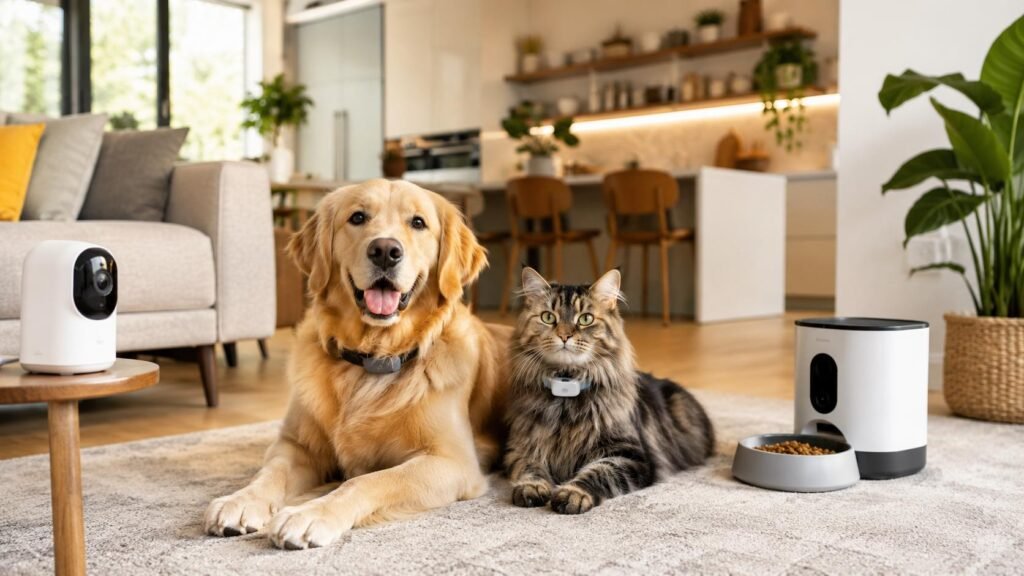
An automatic feeder follows a programmed feeding schedule. A smart water fountain provides access to drinking water. A pet camera allows remote observation, while a GPS-enabled collar helps monitor outdoor adventures.
With compatible smart home systems, some devices can be coordinated through a single application or automated routine.
A smart pet home could offer:
-
- Scheduled feeding and hydration reminders.
-
- Automated environmental monitoring.
-
- Remote observation and communication.
-
- Activity notifications.
-
- Connected pet care routines.
The objective is not to turn a home into a complicated technological environment.
Instead, it is to create a safer, more convenient, and more organised living space that supports the needs of both pets and their owners.
9. Challenges and Limitations of Automated Pet Care
Despite its advantages, automated pet care also presents challenges that owners should understand.
Equipment reliability: Devices can malfunction, lose power, or experience connectivity problems. Essential care routines should always have backup arrangements.
Privacy and data security: Connected cameras, microphones, and applications may collect personal information. Owners should review privacy policies, secure their accounts, and maintain updated software.
Financial considerations: Advanced devices can be expensive, and some require subscriptions or replacement components.
Animal acceptance: Not every pet immediately feels comfortable around unfamiliar automated devices. Gradual introductions are often necessary.
Overdependence on technology: No automated system can replace affection, supervision, exercise, social interaction, and responsible human caregiving.
Understanding these limitations is essential to making informed purchasing decisions.
10. What Will Automated Pet Care Look Like in the Future?
The next generation of pet care technology could become even more sophisticated.
Several developments are worth watching:
More advanced AI monitoring: Future systems may become better at identifying behavioural patterns and recognising changes in daily routines.
Integrated pet care platforms: Different devices may increasingly communicate through unified applications, giving owners a more complete overview of daily pet care.
Smarter health monitoring: Wearable sensors and connected devices may provide more detailed wellness information, helping owners and veterinarians evaluate relevant changes.
Personalised feeding solutions: Connected feeding systems may become more adaptable to individual dietary plans and feeding recommendations.
Improved automation and accessibility: More affordable devices could make smart pet care accessible to a wider range of households.
These possibilities are promising, although their practical value will depend on reliability, scientific validation, affordability, and animal welfare considerations.

Conclusion: Technology Should Make Pet Care Better, Not Less Personal

The future of automated pet care is full of exciting possibilities.
Artificial intelligence, connected devices, smart monitoring systems, and robotic technologies are changing how people approach everyday pet ownership.
These innovations can help simplify routine tasks, improve awareness of animal behaviour, and provide useful information to owners.
However, one principle must remain at the heart of every technological advancement: pets need responsible human care.
No automatic feeder can replace affection. No camera can replace companionship. No wearable device can replace a veterinarian.
The most successful future for automated pet care will be one in which technology and human responsibility work together.
At AUTOMATED PET CARE, we believe that smarter technology should lead to happier pets, more informed owners, and better everyday care.
Because the future of pet care is not simply about automation. It is about making every moment of caring for our pets count.
Stay connected with AUTOMATED PET CARE as we continue exploring the innovations, products, and ideas shaping the future of smarter pet ownership.