
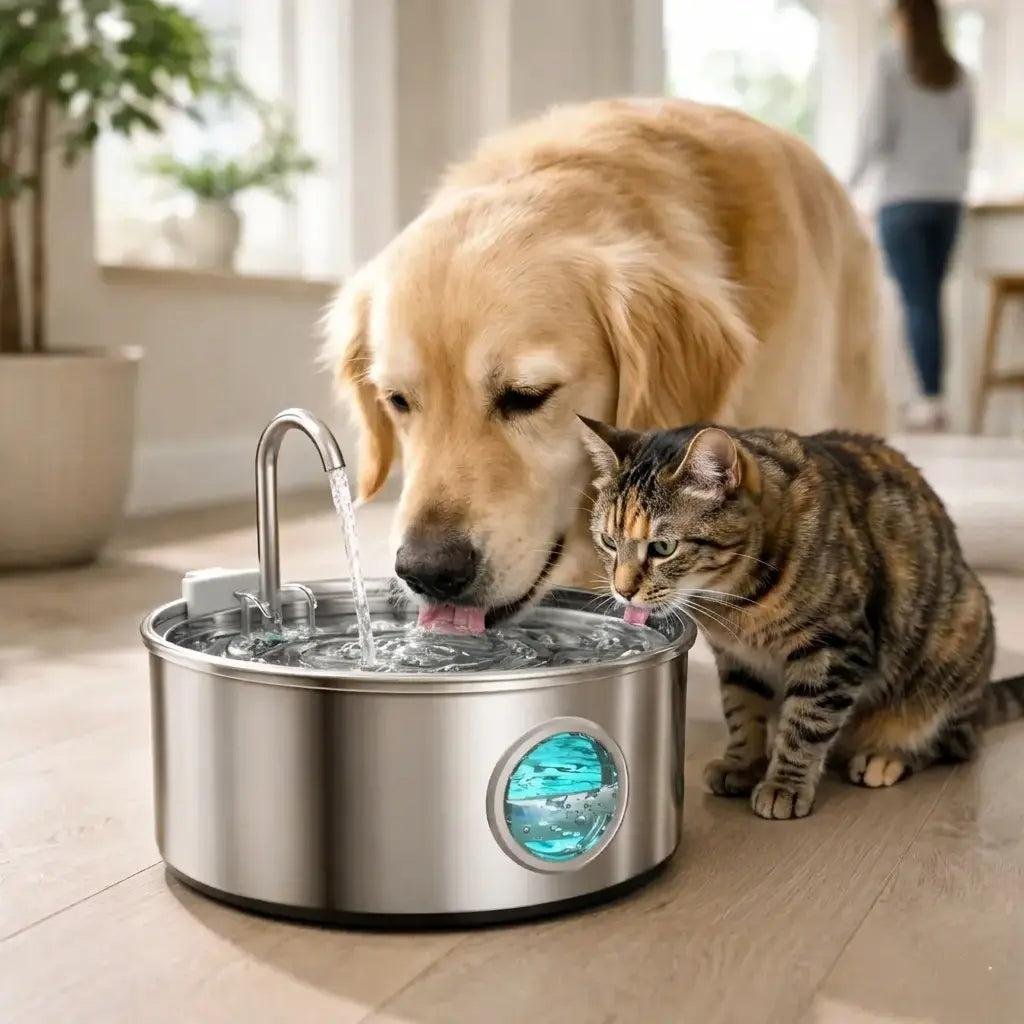
Benefits and Drawbacks of Pet Water Fountains. Are they really worth it?
Benefits and Drawbacks of Pet Water Fountains. Are they really worth it? Discover the health benefits, honest drawbacks, maintenance costs, and veterinary opinions before you buy..
Keeping our pets healthy and comfortable starts with meeting their everyday needs. Fresh drinking water is one of the simplest yet most important parts of responsible pet care. However, some cats and dogs can be particular about where and how they drink.
This is one reason automatic pet water fountains have become increasingly popular. Unlike traditional water bowls, these devices circulate water continuously, and many models include filters designed to capture hair, food particles and other debris.
But are pet water fountains really worth the investment? Do they encourage pets to drink more water? Are the benefits greater than the costs and maintenance requirements?
In this guide, we’ll look at the advantages and disadvantages of pet water fountains, compare them with ordinary water bowls and explain what to consider before buying one.
1. What Is a Pet Water Fountain?
A pet water fountain is a drinking device that circulates water through a small electric pump. Depending on its design, water may flow from a spout, bubble gently across a surface or move through a shallow drinking area.
Many fountains also have filters that help remove visible debris, loose hair and some impurities. The exact filtration performance depends on the filter type and the manufacturer’s design.
Most models include:
-
- A water reservoir to hold drinking water
-
- A pump to circulate the water
-
- A drinking area or flowing-water outlet
-
- A filter, if included in the design
-
- A power source, such as an electrical cable or rechargeable battery
The goal is to provide a convenient source of circulating drinking water for pets. However, a fountain still needs regular refilling, cleaning and maintenance.
2. The Main Benefits of Pet Water Fountains
Pet water fountains can offer several practical advantages. Their usefulness depends on your pet’s preferences, the fountain’s design and how well it is maintained.
Benefit 1: They May Encourage Some Pets to Drink
Some cats and dogs are attracted to moving water. A gentle stream or bubbling surface may catch their attention and encourage them to investigate the fountain.
For pets that show a preference for running water, a fountain may make drinking more appealing.
However, not every pet reacts in the same way. Some animals prefer a familiar, still water bowl, so it is best to observe your pet’s behaviour rather than assume a fountain will automatically increase water intake.
Benefit 2: Circulating Water Can Help Keep Water Moving
Unlike a traditional bowl, a fountain continuously moves water while its pump is operating.
This circulation can help prevent water from becoming completely still between cleaning sessions. It does not, however, keep the water sterile or eliminate the need to wash the fountain.
Benefit 3: Filters Can Capture Certain Debris
Many pet water fountains use replaceable filters.
Depending on the model, these may help capture:
-
- Loose pet hair
-
- Food particles
-
- Some sediment
-
- Certain substances that affect water taste or odour
Some filters combine mesh, activated carbon or other filtration materials. Their performance varies, so check the manufacturer’s product information.
Remember that filters do not replace regular cleaning or guarantee that water is free from microorganisms.
Benefit 4: Convenient Water Storage
A fountain usually has a larger reservoir than a small drinking bowl.
This can be useful for households with more than one pet or owners who prefer not to refill a small bowl several times a day.
Nevertheless, a larger reservoir should not be treated as a substitute for checking the water level and freshness regularly.
Benefit 5: Different Designs for Different Pets
Pet water fountains are available in many styles, sizes and materials.
You can find models made from:
-
- Stainless steel
-
- Plastic
-
- Ceramic
There are also compact fountains for cats, larger-capacity models for dogs and designs intended for multi-pet households.
This variety makes it easier to select a fountain that suits your pet’s size, drinking habits and the space available at home.

3. Possible Drawbacks of Pet Water Fountains
Although fountains can be useful, they are not perfect for every household.
Before buying one, consider these potential disadvantages.
Drawback 1: The Initial Purchase Cost
A traditional water bowl is usually inexpensive. An automatic fountain costs more because it includes a pump and, in many cases, a filtration system.
Higher-end models may also include smart features, water-level indicators or rechargeable power systems.
You should consider both the purchase price and the ongoing cost of replacement filters and parts.
Drawback 2: Regular Cleaning Is Essential

A fountain is not a self-cleaning appliance.
Hair, saliva, food debris and mineral deposits can collect in the reservoir, drinking area and pump.
If the fountain is neglected, residue and biofilm may build up on surfaces that come into contact with water.
To maintain good hygiene:
-
- Refresh the water regularly.
-
- Wash the reservoir and drinking surfaces according to the instructions.
-
- Clean the pump and its components as recommended.
-
- Replace filters at the recommended intervals.
-
- Check for damaged or worn parts.
Drawback 3: Pump Noise Can Bother Some Pets
Some fountains operate quietly, while others produce noticeable humming, vibration or splashing.
A nervous cat or dog may be uncomfortable with an unfamiliar sound.
If your pet is sensitive to noise, choose a model with a quiet pump and adjustable water flow. Check customer feedback carefully and place the fountain somewhere calm.
Drawback 4: Dependence on Electricity or Batteries
Most automatic fountains need electricity to circulate water.
If the power supply is interrupted or the pump stops working, the fountain may no longer operate as intended.
Some battery-operated models offer greater placement flexibility, but their batteries still need charging or replacement.
It is sensible to keep a separate clean water bowl available as a backup.
Drawback 5: Some Pets May Not Like Them
Not every cat or dog enjoys moving water.
Some pets may be frightened by the sound, movement or unfamiliar appearance of a fountain. Others may simply prefer drinking from their usual bowl.
Introduce a fountain gradually and allow your pet to explore it without pressure.
4. Do Pet Water Fountains Really Encourage Better Hydration?
This is one of the most common questions pet owners ask.
The answer is that a fountain may encourage some pets to drink, particularly animals that are attracted to moving water. However, it is not guaranteed to increase water consumption in every cat or dog.
Hydration needs vary according to factors such as:
-
- Age and body size
-
- Activity level
-
- Weather and temperature
-
- Diet, including wet or dry food
-
- General health
-
- Individual drinking habits
A pet’s water intake should be considered as part of its overall health and diet.
If you notice a sudden increase or decrease in drinking, frequent urination or other unusual changes, consult your veterinarian rather than relying on a fountain to solve the problem.
5. Are Pet Water Fountains Suitable for Cats and Dogs?
Pet fountains can be suitable for both cats and dogs, provided the model matches the animal’s needs.
For Cats

Some cats prefer moving water and may enjoy drinking from a gentle fountain.
When choosing a fountain for a cat, consider:
-
- A quiet pump
-
- A shallow and comfortable drinking area
-
- Easy-to-clean surfaces
-
- A stable design
-
- A suitable water flow
Cats that are nervous around unfamiliar objects should be introduced to the fountain gradually.
For Dogs
Dogs may benefit from a larger drinking area and a reservoir with sufficient capacity.
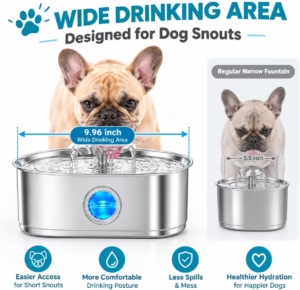
For larger breeds, look for:
-
- A generous drinking surface
-
- A stable base
-
- Easy access to water
-
- A reservoir suitable for the dog’s size
-
- Durable construction
The fountain should be positioned where your dog can drink comfortably without having to stretch or bend awkwardly.
For Multi-Pet Households
If several pets share a fountain, capacity and cleaning become especially important.
Choose a model that can accommodate the number and size of your pets. In some homes, more than one drinking station may be helpful.
6. Pet Water Fountain vs. Traditional Water Bowl
Is an automatic fountain necessarily better than a traditional bowl?
Not always. Both can provide fresh drinking water when properly maintained.
| Feature | Pet water fountain | Traditional water bowl |
|---|---|---|
| Water movement | Circulates while operating | Still water |
| Initial cost | Usually higher | Usually lower |
| Maintenance | Cleaning, pump care and possible filter changes | Regular washing and refilling |
| Electricity | Usually required | Not required |
| Noise | Pump may make noise | Silent |
| Portability | Depends on model and power source | Usually easy to move |
| Pet preference | Some pets enjoy moving water | Familiar to most pets |
A fountain may be a useful choice for pets that enjoy moving water. A traditional bowl remains a perfectly reasonable option for animals that drink comfortably from it.
You do not necessarily need to replace every water bowl in your home with an automatic fountain.
7. How Much Does It Cost to Own a Pet Water Fountain?
The total cost involves more than the initial purchase.
Before choosing a model, consider these expenses:
Purchase Price
Basic plastic fountains are often more affordable, while some stainless steel, ceramic and feature-rich models cost more.
Replacement Filters
Many fountains use replaceable filters. Check their price, availability and recommended replacement frequency before buying.
Electricity or Batteries
Mains-powered fountains use electricity, while cordless models may require battery charging or replacement.
Replacement Parts
Pumps and other components may eventually need replacing. Check whether spare parts are available.
Cleaning Supplies
You may also need suitable cleaning tools or supplies, depending on the manufacturer’s instructions.
A reasonably priced fountain with readily available filters and replacement parts may offer better long-term value than a cheaper model that is difficult to maintain.
8. How to Choose the Right Pet Water Fountain
If you decide that a fountain is suitable for your pet, consider these practical buying tips.
-
- Choose the right capacity: Select a reservoir suitable for your pet’s size and the number of animals using it.
-
- Consider the material: Stainless steel is generally durable and easy to clean; plastic is lightweight and affordable; ceramic offers a heavier, decorative design.
-
- Check the pump noise: Look for a quiet model, especially if your pet is easily startled.
-
- Check filter availability: Replacement filters should be easy to obtain at a reasonable cost.
-
- Look for easy cleaning: Removable parts and accessible pump components make maintenance simpler.
-
- Consider the power source: Decide whether a mains-powered or cordless model is more convenient.
-
- Check stability: The fountain should remain steady while your pet drinks.
-
- Read the manufacturer’s instructions: Check cleaning requirements, filter replacement intervals and component compatibility.
For a more detailed material comparison, see our article: Stainless Steel vs. Plastic vs. Ceramic Pet Water Fountains: Which Is Best?
9. How to Introduce a Pet Water Fountain
Some pets approach a new fountain immediately, while others need time to become comfortable with it.
Try these simple steps:
-
- Place the fountain in a familiar, quiet location.
-
- Initially keep your pet’s usual water bowl available.
-
- Let your pet inspect the fountain while it is switched off.
-
- Turn it on when your pet seems comfortable.
-
- Use a gentle water-flow setting if the model allows it.
-
- Give your pet time to explore without forcing interaction.
-
- Observe whether your pet drinks from it regularly.
Never withhold the usual water supply to force your pet to use a fountain.
10. Frequently Asked Questions
Are pet water fountains really worth buying?
They can be worthwhile for pets that enjoy moving water and for owners who value a larger circulating water supply. However, they involve additional purchase and maintenance costs. A traditional bowl remains suitable for many pets.
Do cats drink more water from fountains?
Some cats may drink more when offered moving water, but individual responses vary. Monitor your cat’s drinking habits rather than assuming a fountain will increase intake.
Are pet water fountains hygienic?
They can be hygienic if you clean and maintain them properly. The reservoir, pump and drinking surfaces need regular cleaning, and filters must be replaced as instructed.
How often should I clean a pet water fountain?
Cleaning frequency depends on the model, number of pets and manufacturer’s guidance. Follow the recommended schedule, refresh the water regularly and clean the pump and reservoir as directed.
Can dogs use cat water fountains?
Yes, provided the fountain is large enough, stable and comfortable for the dog to use. Check the drinking height, reservoir capacity and durability.
What happens if the fountain stops working?
The water may stop circulating. Keep a separate bowl of fresh water available so your pet always has access to drinking water.
Which material is best for a pet water fountain?
Stainless steel is a strong all-round choice for many owners because it is durable and generally easy to clean. Plastic and ceramic can also be suitable when well designed and maintained.
11. Final Verdict: Are Pet Water Fountains Really Worth It?
Pet water fountains can be a useful addition to a pet-friendly home, but they are not essential for every cat or dog.
Their main advantages include circulating water, optional filtration, a convenient reservoir capacity, and the potential to encourage some pets to drink more.
On the other hand, they involve an initial investment, regular cleaning, replacement filters and dependence on a pump or power source.
Our recommendation: Consider buying a pet water fountain if your animal shows interest in moving water, you want a larger circulating drinking station or you are prepared to maintain the appliance properly.
If your pet already drinks comfortably from a clean traditional bowl, you may not need to replace it.
Ultimately, the best drinking solution is one that your pet uses comfortably and that you can keep clean and well maintained.
Fresh water, regular cleaning and attention to your pet’s individual needs matter far more than choosing an expensive appliance.
Disclaimer: This article is for general informational purposes only and is not a substitute for veterinary advice. If your pet shows unusual drinking habits, signs of dehydration or other health concerns, consult a qualified veterinarian.