
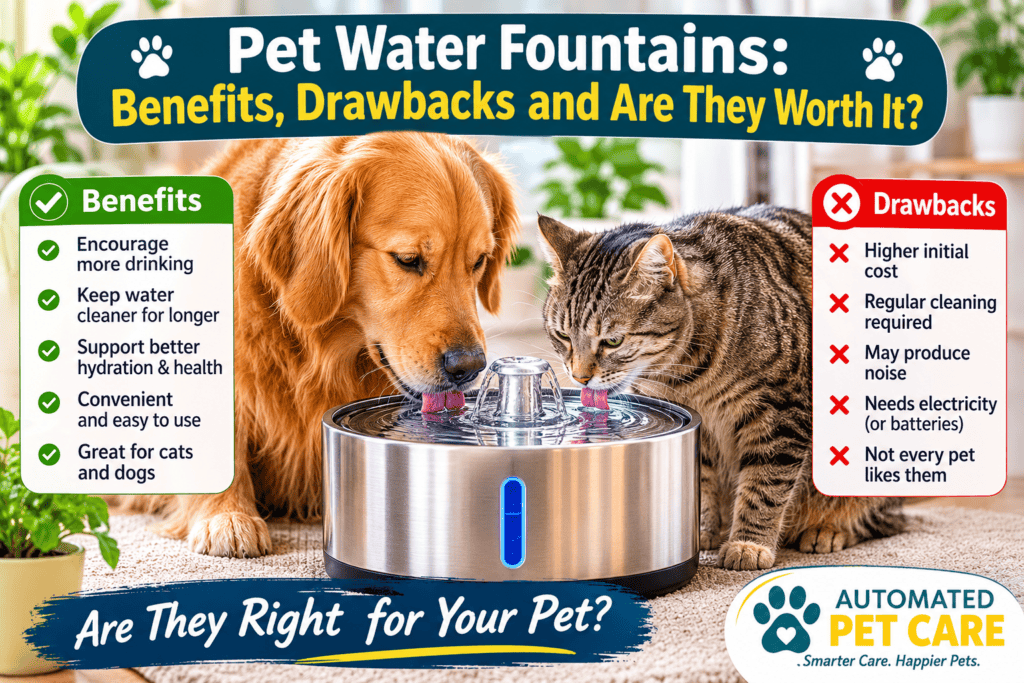
Stainless Steel vs. Plastic vs. Ceramic Pet Water Fountains
Compare Stainless Steel vs. Plastic vs. Ceramic Pet Water Fountains. Explore their pros, cons, cleaning needs and costs to choose the best one for your pet.
Choosing an automatic pet water fountain can be a great way to make fresh, circulating water more accessible to your cat or dog. However, with so many models available, choosing the right material can be just as important as selecting the right size or design.
Pet water fountains are commonly made from three materials: stainless steel, plastic and ceramic. Each has its own advantages and disadvantages when it comes to hygiene, durability, cleaning, noise, appearance and price.
So, which material is best for your pet?
In this guide, we’ll compare stainless steel, plastic and ceramic pet water fountains to help you make an informed choice.
Why Does the Material of a Pet Water Fountain Matter?
The material affects more than the appearance of a water fountain. It can influence how easy the fountain is to clean, how well it withstands everyday use and how much maintenance it requires.
For example, some plastic surfaces can develop scratches over time, while ceramic fountains may be heavier and more fragile. Stainless steel is generally durable and easy to clean, but it can cost more than basic plastic models.
Before buying a fountain, consider your pet’s habits, your cleaning routine and your budget.
1. Stainless Steel Pet Water Fountains

Stainless steel is a popular choice for pet owners who want a durable, practical and easy-to-clean water fountain.
Many stainless steel models have removable components, making routine cleaning more convenient.
Benefits of stainless steel fountains
-
- Easy to clean: Smooth stainless steel surfaces are generally straightforward to wash.
-
- Durable: Good-quality stainless steel resists everyday wear and is less likely to crack than ceramic.
-
- Less likely to retain odours: Stainless steel is non-porous, so it is less prone to absorbing smells.
-
- Modern appearance: Its simple, polished finish suits many homes.
-
- Often dishwasher-safe components: Some models have dishwasher-safe parts, but always check the manufacturer’s instructions.
Drawbacks of stainless steel fountains
-
- Higher purchase price: Some stainless steel models cost more than basic plastic alternatives.
-
- Possible water noise: Metal surfaces may make splashing or pump vibrations more noticeable in certain designs.
-
- Water marks: Mineral deposits and fingerprints may show on polished surfaces.
-
- Quality varies: Look for clearly specified food-grade stainless steel and check the manufacturer’s care instructions.
Who should consider stainless steel?
Stainless steel is a good option for owners who value durability, straightforward cleaning and a practical design. It can be especially appealing for households that use a fountain every day.
2. Plastic Pet Water Fountains
Plastic fountains are widely available and are often among the most affordable options. They come in many shapes, sizes and colours, making it easy to find a model that suits your home and pet.

Benefits of plastic fountains
-
- Affordable: Plastic models are often less expensive than stainless steel or ceramic alternatives.
-
- Lightweight: They are easy to move, lift and refill.
-
- Wide variety: Many designs and capacities are available.
-
- Convenient to handle: Lightweight components can make routine refilling easier.
-
- Good for beginners: A basic plastic model can be a practical way to introduce your pet to a fountain.
Drawbacks of plastic fountains
-
- Scratches can develop: Everyday use and cleaning may leave scratches where residue and biofilm can accumulate.
-
- May retain odours: Some plastics can absorb smells over time.
-
- Durability varies: Lower-quality plastic may become brittle or damaged with repeated use.
-
- More frequent inspection may be needed: Scratched or damaged parts should be replaced according to the manufacturer’s guidance.
Who should consider plastic?
Plastic may suit owners looking for an affordable, lightweight fountain or those who want to try a fountain before investing in a more expensive model.
Choose a well-made product with smooth surfaces and removable parts, and inspect it regularly for scratches or damage.
3. Ceramic Pet Water Fountains
Ceramic fountains are popular with owners who prefer an attractive, heavier design. They often have a smooth glazed finish and can look more like a decorative home accessory than a pet appliance.
Benefits of ceramic fountains
-
- Attractive appearance: Ceramic models are available in many colours, shapes and finishes.
-
- Heavier construction: Their weight can make them more stable and less likely to move around.
-
- Smooth glazed surfaces: Properly finished, undamaged glaze is generally easy to wipe and wash.
-
- Less prone to scratching during normal use: Ceramic does not develop the same type of surface scratches as plastic.
Drawbacks of ceramic fountains
-
- Can break or chip: Ceramic is heavier but may crack if dropped or knocked against a hard surface.
-
- More difficult to move: The weight can make refilling and cleaning less convenient.
-
- Glaze quality matters: Chips or cracks can make cleaning more difficult. Damaged components should be replaced.
-
- Can cost more: Some ceramic fountains are more expensive than basic plastic models.

Who should consider ceramic?
Ceramic can be a good choice for owners who value appearance and stability. It may suit pets that tend to push or move lightweight bowls, provided the fountain is placed on a stable surface.
4. Stainless Steel vs. Plastic vs. Ceramic: Quick Comparison
Here is a simple comparison of the three materials.
| Feature | Stainless steel | Plastic | Ceramic |
|---|---|---|---|
| Cleaning | Generally easy | Depends on design and condition | Generally easy if glaze is intact |
| Durability | Usually high | Varies by quality | Durable but breakable |
| Weight | Moderate | Lightweight | Heavy |
| Scratch resistance | Generally good | Can scratch | Glazed surface can chip |
| Odour retention | Low | May retain odours | Low if glaze is intact |
| Price | Often moderate to high | Often low | Varies, sometimes high |
| Appearance | Modern | Many styles | Decorative |
Remember that the quality of the fountain, its design and the manufacturer’s instructions matter as much as the material itself.
5. Which Material Is the Most Hygienic?
Hygiene is one of the most important considerations when choosing a pet water fountain.
All three materials can be suitable when they are properly designed, maintained and cleaned. However, their surfaces behave differently.
-
- Stainless steel: Its smooth, non-porous surface is generally easy to clean and less likely to retain odours.
-
- Plastic: Scratches can make cleaning more difficult, so inspect the surface regularly.
-
- Ceramic: A smooth, intact glaze is generally easy to wash, but chipped or cracked surfaces should not be ignored.
No material makes a fountain self-cleaning. Water reservoirs, pump components, filters and drinking surfaces all need regular attention.
Follow the manufacturer’s cleaning instructions, replace filters as recommended and refresh the water regularly.
6. Which Pet Water Fountain Is Best for Cats and Dogs?
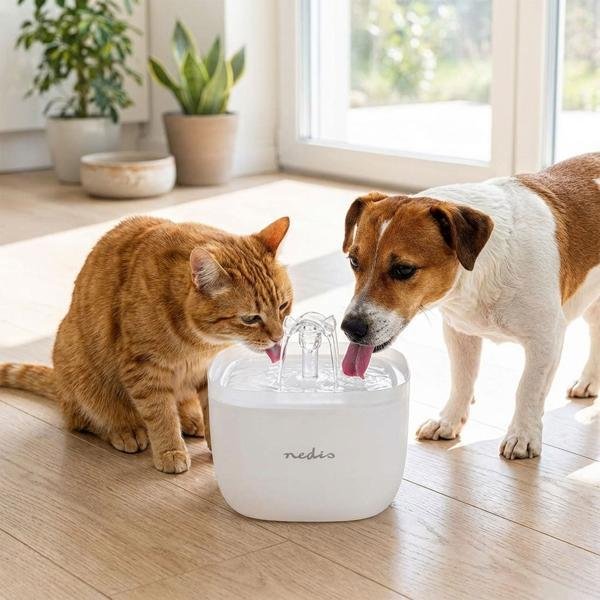
The best material may depend on your pet’s size, behaviour and drinking habits.
For cats
Cats may prefer a quiet fountain with a gentle water flow. Stainless steel and ceramic models can be attractive choices because they are generally easy to clean when well designed.
If your cat is nervous around unfamiliar sounds, look for a quiet pump and adjustable water flow.
For dogs
Dogs may need a larger drinking area and a higher-capacity reservoir, particularly if they are large or share the fountain with other pets.
A sturdy stainless steel or ceramic model may be worth considering. Check that the drinking area is comfortable for your dog’s size.
For multi-pet households
If several pets share a fountain, capacity and ease of cleaning become especially important. Choose a model that can provide enough drinking water and is easy to dismantle for regular maintenance.
7. Important Features to Check Before Buying
The material is important, but it should not be the only factor in your decision.
Before purchasing, consider these features:
-
- Capacity: Choose a reservoir suitable for your pet’s size and the number of animals using it.
-
- Pump noise: A quiet pump may encourage nervous pets to approach.
-
- Filter availability: Check whether replacement filters are easy to find and reasonably priced.
-
- Cleaning: Look for removable parts and a design that is easy to dismantle.
-
- Power supply: Decide whether a mains-powered or battery-operated model better suits your home.
-
- Stability: The fountain should stay in place while your pet drinks.
-
- Replacement parts: Check whether pumps, filters and other components can be replaced.
8. How to Keep Your Pet Water Fountain Clean

Regardless of whether you choose stainless steel, plastic or ceramic, regular maintenance is essential.
Here are some simple care tips:
-
- Refresh the water frequently and never allow it to become visibly dirty.
-
- Wash the drinking surface and reservoir according to the manufacturer’s instructions.
-
- Clean the pump and its small components as recommended.
-
- Replace filters at the intervals specified by the manufacturer.
-
- Check plastic surfaces for scratches and ceramic parts for chips or cracks.
-
- Unplug the fountain before dismantling or cleaning electrical components.
-
- Allow cleaned parts to dry as directed before reassembling.
A clean fountain helps keep the drinking area pleasant and encourages good everyday hygiene.
9. Frequently Asked Questions
Is stainless steel better than plastic for pet water fountains?
Stainless steel is generally more resistant to scratching and odour retention and is easy to clean. Plastic is usually lighter and less expensive. The better option depends on your budget, cleaning habits and the quality of the product.
Are ceramic pet water fountains safe?
A ceramic fountain made with pet-safe materials and an intact, suitable glaze can be a good option. Avoid using components that are cracked, chipped or damaged.
Do plastic pet fountains become unhygienic?
Not necessarily. Plastic fountains can be kept clean with regular maintenance. However, scratches and damage can make cleaning more difficult, so inspect the surfaces and replace worn components when needed.
Which pet water fountain lasts the longest?
A well-made stainless steel model can offer good long-term durability. However, lifespan also depends on pump quality, usage, cleaning and the availability of replacement parts.
Can I put my pet’s water fountain in the dishwasher?
Only if the manufacturer specifically states that the relevant components are dishwasher-safe. Pumps, electrical parts and some filters should never be placed in a dishwasher.
Which material is best for a pet with sensitive skin?
Some owners prefer stainless steel because it is smooth, non-porous and easy to clean. However, a fountain’s material alone cannot diagnose or prevent skin problems. Ask your veterinarian if your pet has persistent irritation or suspected allergies.

10. Final Verdict: Which Pet Water Fountain Should You Choose?
There is no single perfect material for every pet or household.
-
- Choose stainless steel if you prioritise durability, easy cleaning, and odour resistance.
-
- Choose plastic if affordability and lightweight handling are your main concerns.
-
- Choose ceramic if you prefer an attractive, stable fountain with a smooth glazed surface.
Our practical recommendation is to consider a good-quality stainless steel fountain as a strong all-round option. Nevertheless, a well-designed plastic or ceramic fountain can also serve your pet well when it is properly maintained.
The most important thing is to choose a fountain that your pet feels comfortable using and that you can clean regularly.
A suitable water fountain, combined with fresh water and good maintenance, can be a useful addition to your pet-care routine.
Disclaimer: This article is for general informational purposes only and is not a substitute for veterinary advice. If your pet has changes in drinking habits or signs of dehydration, consult a qualified veterinarian.