Choosing the Best Automated Self-Cleaning Litter Boxes for Multiple Cats
Living with multiple cats can make litter-box maintenance one of the most repetitive parts of pet ownership. A single cat already produces frequent waste, while two, three, or more cats can quickly turn scooping, odour management, litter replacement, and box cleaning into a daily chore. That is where automated self-cleaning litter boxes can make a meaningful difference. Instead of manually removing clumps after every use, these systems automatically separate waste from clean litter and deposit it into a dedicated waste compartment.
For multi-cat households, however, choosing the right automatic litter box requires more than simply finding a model advertised as “self-cleaning.” Consider waste capacity, cleaning-cycle reliability, safety sensors, litter compatibility, odour control, entry dimensions, app functionality, maintenance requirements, and the needs of individual cats. A box that performs well for one average-sized cat may require much more frequent attention when several cats share it.
For 2026, the market includes mature rotating systems, open-top designs, advanced camera-equipped models, and odour-focused machines. The Litter-Robot 4 remains one of the strongest all-around choices, while the Neakasa M1 Plus is particularly attractive for cats that dislike enclosed designs. The PETKIT PuraMax 2 provides a compelling balance of features and price, while the PetSnowy SNOW+ emphasises odour management and sealed waste handling. The PETKIT Purobot Max Pro 2 adds advanced monitoring and smart-home functionality for owners who want more detailed information about their cats.
The best choice ultimately depends on the number, size, habits, and preferences of the cats using the box. For a genuinely multi-cat household, we should prioritise a machine that can handle repeated daily cycles without becoming difficult to maintain.
Best Automated Self-Cleaning Litter Boxes for Multi-Cat Homes: Detailed 2026 Comparison
Our 5 Best Automated Self-Cleaning Litter Boxes for Multi-Cat Homes
1. Litter-Robot 4 — Best Overall for Multi-Cat Households
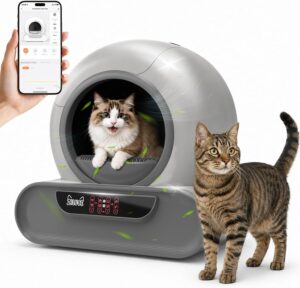
The Litter-Robot 4 is our strongest overall choice for households that want a mature, feature-rich automatic litter-box system. Its rotating design separates clumped waste from reusable litter after the cat leaves, transferring waste into a covered drawer. Its established ecosystem, automatic cleaning, odour-control design, and cat-monitoring capabilities make it particularly suitable for owners who want to minimise routine scooping. Current 2026 roundups continue to rank the Litter-Robot 4 among the leading automatic litter boxes, particularly for its overall ownership experience and multi-cat capabilities.
For a multi-cat home, capacity and reliability matter more than novelty. Each additional cat increases the number of cleaning cycles the machine needs to complete, so a system designed around frequent automatic operation has a major practical advantage.
The Litter-Robot 4 also offers smart monitoring through the Whisker ecosystem. Weight and activity information can help owners identify changes in bathroom habits, which can be useful when several cats share the same household and behavioural changes might otherwise be difficult to notice.
Its primary disadvantage is cost. It sits firmly in the premium category, so households looking for the lowest initial purchase price may prefer PETKIT or Neakasa alternatives. Nevertheless, for owners prioritising a mature product ecosystem and minimising daily litter maintenance, the Litter-Robot 4 remains a compelling choice.
Best for: Multi-cat households seeking the most balanced combination of automation, monitoring, capacity, and established technology.
2. Neakasa M1 Plus — Best Open-Top Automated Litter Box
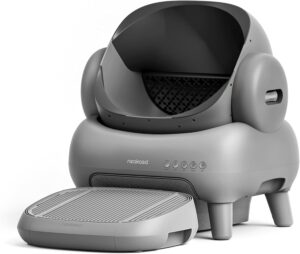
The Neakasa M1 Plus takes a fundamentally different approach. Rather than placing the cat inside a rotating enclosed globe, it uses an open-top design that gives cats a more spacious and unobstructed entrance. This can be particularly valuable for large breeds, nervous cats, or cats that have previously avoided enclosed automatic litter boxes.
According to Neakasa’s current product information, the M1 is designed to accommodate larger cats, including Maine Coons and Ragdolls, while supporting clumping or scoopable litter. The manufacturer recommends fast-clumping granular litter and specifically excludes several non-clumping and pellet-style litter types.
For multi-cat homes, the open configuration can also make the box feel less restrictive. Cats vary considerably in their preferences, and an automatic system is only useful if every cat is willing to use it.
The M1 Plus incorporates multiple sensors and automatic waste removal while maintaining the open-top format. Its biggest strength, then, is not simply automation; it is cat acceptance. If one of the cats refuses to enter a conventional enclosed robotic litter box, an open design can be a substantially better solution.
The trade-off is that an open-top system may provide less physical containment of litter and odour than some enclosed alternatives. Owners should therefore pay particular attention to placement, litter mats, and the surrounding ventilation.
Best for: Large cats, cats that dislike enclosed litter boxes, and multi-cat homes where accessibility is the priority.
3. PETKIT PuraMax 2 — Best Value for Multi-Cat Homes
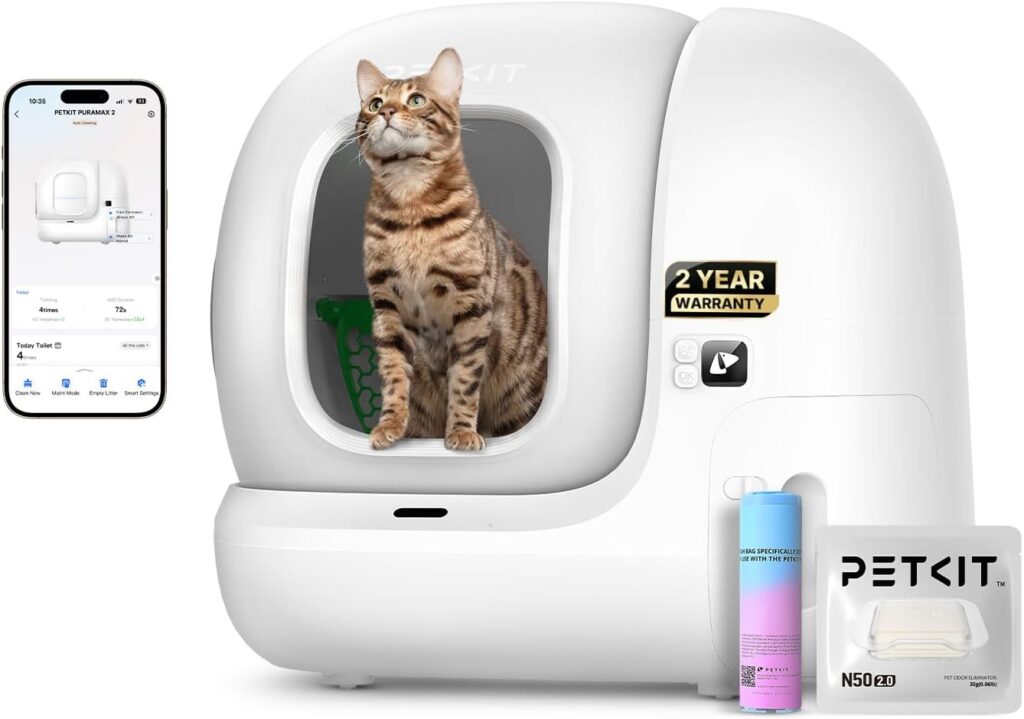
The PETKIT PuraMax 2 is one of the strongest choices when we want many of the conveniences associated with premium automated litter boxes without moving all the way into the highest price bracket. Current 2026 comparisons consistently identify the PuraMax 2 as a value-oriented option with a strong combination of automation, odour management, app connectivity, and smart monitoring.
Its enclosed rotating design automatically separates waste after use, while its relatively compact form can be easier to accommodate in apartments and smaller homes. This matters for multi-cat owners because adding additional litter equipment can consume considerable floor space.
The PuraMax 2 is also attractive for owners who want smartphone-based monitoring. App-connected information can provide a clearer picture of usage patterns, which becomes increasingly useful when multiple cats are using the same system.
Another consideration is litter compatibility. The PuraMax 2 is designed around clumping litter rather than crystal-based systems, so owners should verify that their preferred litter is suitable before purchasing.
The principal reason to choose the PuraMax 2 is value. We can obtain automatic cleaning, odour-control features, and connected monitoring without necessarily paying for the most expensive machine in the category.
Best for: Owners seeking a feature-rich automatic litter box at a more accessible price.
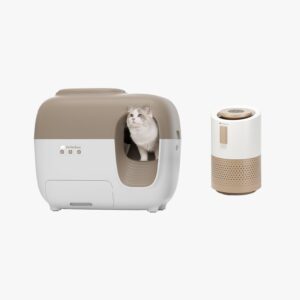
4. PetSnowy SNOW+ — Best for Odor Control
The PetSnowy SNOW+ deserves serious consideration when odour control is the main concern. In a multi-cat home, odour can become significantly more challenging because waste accumulates faster. A machine that removes waste automatically is helpful, but how the waste is contained after removal can be just as important.
The SNOW+ focuses heavily on waste containment and odour management. Current product coverage highlights its sealed waste-handling system and odour-control technology as major differentiators.
This approach is especially attractive when the litter area is located near living spaces. Instead of relying solely on frequent manual emptying, the system is designed to contain removed waste and reduce the amount of odour escaping into the room.
For multi-cat households, we should nevertheless distinguish between odour reduction and odour elimination. No automatic litter box eliminates the need for maintenance. The waste container still needs to be emptied, litter needs to be replenished, and the machine needs periodic cleaning.
The SNOW+ therefore makes the most sense for owners who place a premium on keeping the litter area as unobtrusive as possible while reducing the frequency of direct waste handling.
Best for: Multi-cat households where odour containment is one of the highest purchasing priorities.
5. PETKIT Purobot Max Pro 2 — Best for Advanced Smart Monitoring
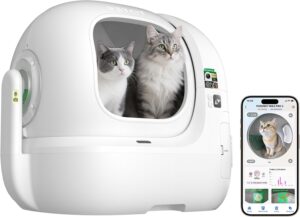
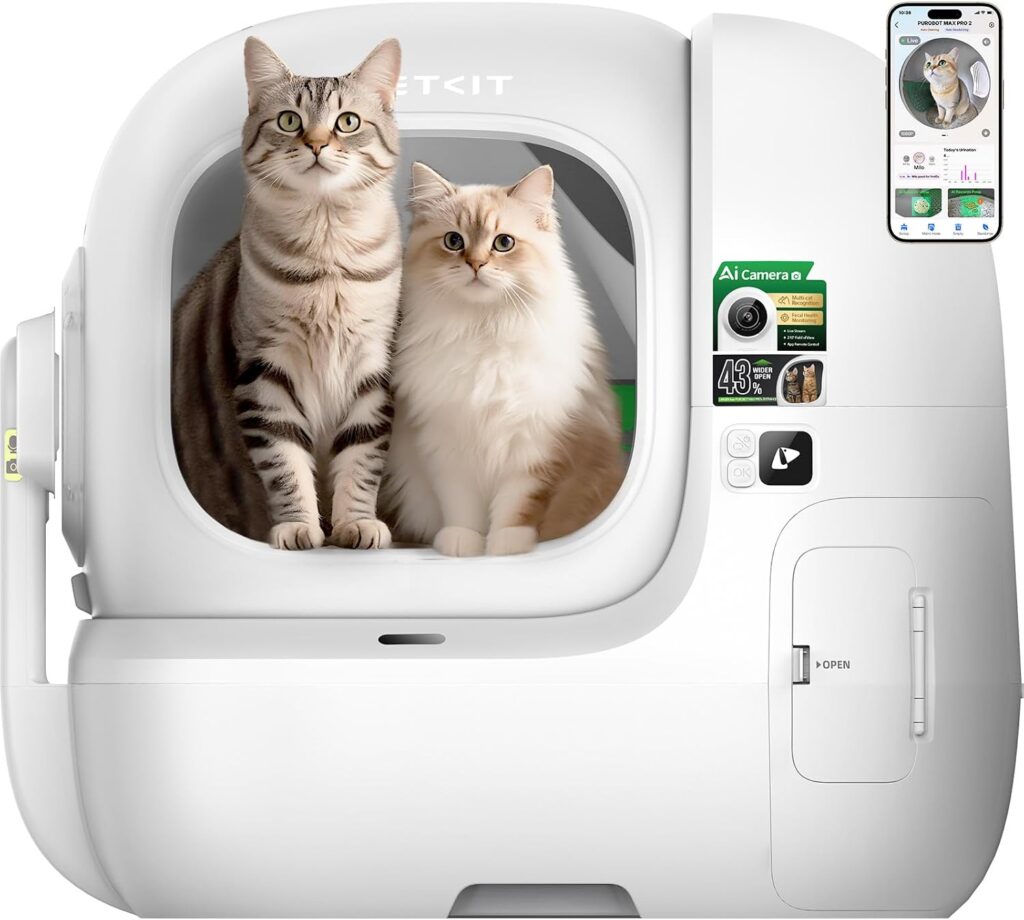
The PETKIT Purobot Max Pro 2 represents the increasingly sophisticated end of the automated litter-box market. Rather than focusing solely on automatic waste removal, this category of product combines cleaning automation with cameras, artificial intelligence, activity monitoring, and more detailed information about individual cats.
The model is featured among leading 2026 automatic litter-box recommendations, with particular attention given to its smart monitoring capabilities and camera-based features.
For a multi-cat household, this can be particularly interesting because distinguishing which cat used the box can otherwise be difficult. Monitoring individual behaviour can give owners additional visibility into litter-box frequency, weight trends, and changes in routine.
This information should be regarded as supplementary monitoring rather than veterinary diagnosis. Nevertheless, unusual changes in litter-box behaviour can be worth investigating, and automated records can make those changes easier to notice.
The Purobot Max Pro 2 is best suited to technology-oriented owners who want their litter box to provide substantially more information than a traditional automated scooper.
Best for: Tech-focused multi-cat owners who value cameras, smart monitoring, and detailed usage information.
Automated Self-Cleaning Litter Boxes: Comparison at a Glance
| Model | Best For | Main Strength | Main Consideration |
|---|---|---|---|
| Litter-Robot 4 | Best overall | Mature automation and monitoring | Premium price |
| Neakasa M1 Plus | Open-top preference | Spacious, accessible design | Open structure may contain litter less effectively |
| PETKIT PuraMax 2 | Best value | Strong feature-to-price balance | Requires compatible clumping litter |
| PetSnowy SNOW+ | Odor control | Sealed waste handling | Still requires routine maintenance |
| PETKIT Purobot Max Pro 2 | Smart monitoring | Advanced camera and AI features | Premium technology may be unnecessary for simple needs |
What Makes a Good Automatic Litter Box for Multiple Cats?
Waste Capacity
Waste capacity becomes one of the most important specifications as the number of cats increases. A small waste drawer may be adequate for one cat but require frequent emptying with three or four cats.
We should therefore evaluate capacity based on actual household usage rather than manufacturer marketing alone. Cats vary in size, diet, litter habits, and frequency of elimination.
Reliable Safety Sensors
Automatic litter boxes contain moving mechanical components, making safety systems essential. The machine should detect when a cat enters or approaches the cleaning mechanism and prevent operation when an animal is present.
For multi-cat households, this becomes even more important because another cat may approach the machine while it is completing a cycle.
Litter Compatibility
Not every automatic litter box works with every type of litter. Most rotating systems require litter that forms firm, removable clumps. Poorly clumping litter can cause residue buildup, inefficient separation, and unnecessary waste.
Before purchasing, we should verify compatibility with the exact litter already used by the cats.
Entry Size and Interior Space
A technically excellent machine is still a poor choice if one of the cats cannot comfortably enter, turn around, dig, or adopt its preferred posture.
Large breeds and overweight cats require particular attention to usable interior dimensions. The external dimensions of the machine are not enough; the usable litter area matters more.
Odour Management
Automatic removal reduces the amount of waste sitting in the litter area, but odour-control performance also depends on sealing, filters, waste-drawer design, litter quality, and room ventilation.
For multiple cats, a sealed waste compartment can be especially beneficial.
How Many Automated Litter Boxes Do We Need for Multiple Cats?
Automation does not necessarily eliminate the need for multiple litter boxes. Cats can be territorial, selective, or reluctant to share resources.
A commonly recommended starting point is one litter box per cat plus one additional box, although household space and individual feline behaviour can affect the practical arrangement.
An automatic litter box can serve as the primary system while conventional boxes remain available elsewhere. This hybrid setup can be particularly useful during the transition period or in homes where one cat refuses to use a particular automatic design.
We should also avoid immediately removing all familiar litter boxes after purchasing an automated model. Gradual introduction gives cats time to investigate the new equipment without suddenly losing access to their established bathroom locations.
How to Introduce an Automated Self-Cleaning Litter Box
The transition should be gradual. Place the new unit near the existing litter area and allow cats to investigate it while it is switched off or operating only when appropriate.
Continue using familiar litter during the initial transition if it is compatible with the machine. Cats can be highly sensitive to changes in litter texture, scent, location, and box design.
Once cats begin using the automated unit consistently, we can gradually reduce reliance on the old box. The process should be guided by the cats’ behaviour rather than by a fixed timetable.
The most important objective is consistent litter-box use, not immediate automation.
Maintenance Still Matters
The phrase “self-cleaning” can create unrealistic expectations. Automated litter boxes eliminate much of the repetitive scooping, but they do not eliminate maintenance.
We should routinely:
-
- Empty the waste compartment before it becomes excessively full.
-
- Maintain the recommended litter level.
-
- Remove litter residue from sensors and moving components.
-
- Clean surfaces according to the manufacturer’s instructions.
-
- Replace filters or odour-control components when required.
-
- Inspect the unit for clumps, debris, or mechanical obstruction.
-
- Keep the surrounding floor clean with an appropriately sized litter mat.
For multi-cat households, maintenance intervals may need to be shorter than those advertised for single-cat use.
Which Automated Self-Cleaning Litter Box Should We Choose?
For the broadest combination of features, reliability, and multi-cat usability, we would choose the Litter-Robot 4.
For cats that strongly prefer an open environment, the Neakasa M1 Plus is the more compelling option.
For owners balancing features and price, the PETKIT PuraMax 2 offers one of the strongest value propositions.
For households where odour containment is the overriding concern, the PetSnowy SNOW+ deserves priority.
For owners who want advanced monitoring and camera-based technology, the PETKIT Purobot Max Pro 2 is the most technology-focused choice of the five.
The correct purchase is therefore not necessarily the most expensive machine. It is the model that matches the number of cats, their size, their litter preferences, the available floor space, and the amount of maintenance we are willing to perform.
Conclusion: The Best Automated Self-Cleaning Litter Boxes for Multi-Cat Homes
The best automated self-cleaning litter boxes can substantially reduce the daily workload associated with living with multiple cats, but choosing the right system requires looking beyond the promise of automatic scooping. In a multi-cat environment, every part of the machine is tested more frequently: sensors activate more often, waste compartments fill faster, litter is consumed more rapidly, and odour management becomes more demanding.
For most households, the Litter-Robot 4 remains the strongest all-around recommendation because it combines mature automatic cleaning with smart monitoring and a well-developed product ecosystem. The Neakasa M1 Plus is a particularly strong alternative for cats that prefer open-top access, while the PETKIT PuraMax 2 provides an attractive balance between advanced features and overall value. The PetSnowy SNOW+ is well suited to owners who prioritise waste containment and odour management, and the PETKIT Purobot Max Pro 2 stands apart for owners interested in sophisticated monitoring and camera-based technology.
We should also remember that automation does not replace responsible litter-box management. Regular cleaning, appropriate litter, sufficient resources, and careful observation of each cat remain essential. Multi-cat homes benefit most when technology is used to reduce routine work without compromising feline comfort or access.
Ultimately, the best automatic litter box is the one every cat is comfortable using consistently. When capacity, accessibility, safety, odour control, and maintenance are considered together, an automated system can turn one of the most repetitive household chores into a much simpler part of everyday cat care.